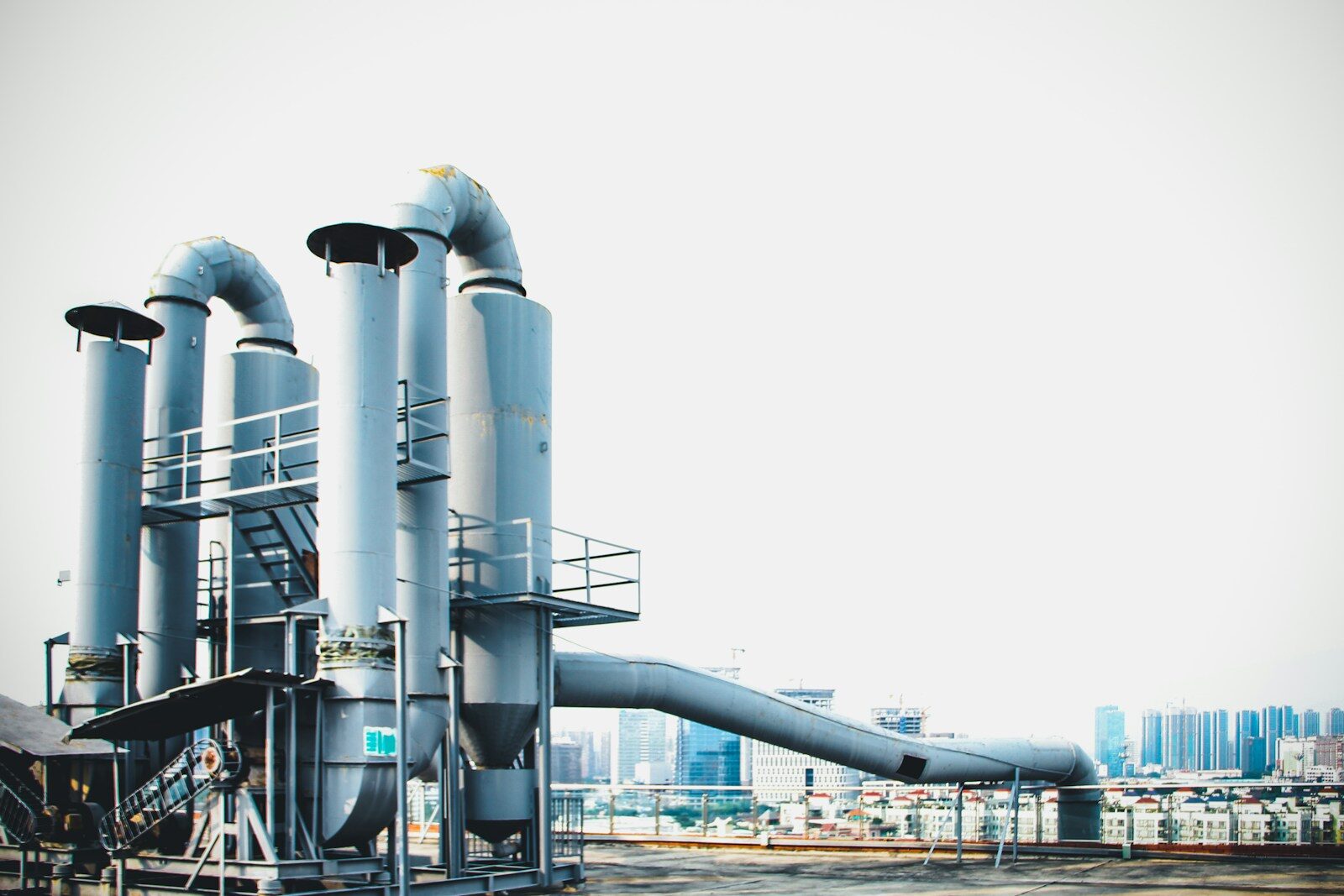
The Hidden Power of Industrial Air Quality: Mastering Wet Scrubber Efficiency
In the high-stakes world of industrial manufacturing, the air you breathe inside your facility is just as important as the products leaving your loading dock. Whether you’re managing a chemical processing plant, a wastewater treatment facility, or a large-scale food production line, the “invisible” byproduct of your operations—gaseous emissions—can become a massive liability if not handled with precision.
Among the most effective tools in the arsenal of environmental compliance and worker safety is the industrial wet scrubber. But a scrubber is only as good as the internal components that facilitate the cleaning process. Specifically, the filtration media and mist eliminators are what transform a basic metal tower into a high-performance air purification system.
Why Air Quality Isn’t Just About Compliance
For many plant managers, air purification is seen through the lens of regulatory “hoop-jumping.” However, shifting that perspective toward operational efficiency can reveal significant cost savings. High-quality industrial filtration helps to:
- Protect Expensive Machinery: Corrosive gases can eat away at sensitive electronics and mechanical components over time, leading to premature equipment failure.
- Boost Employee Retention: A clean, odor-free environment significantly improves workplace morale and reduces health-related absenteeism.
- Community Relations: Eliminating foul odors before they leave the stack prevents local complaints and potential legal headaches with neighboring residential or commercial areas.
The Science of Wet Scrubbing
The core mechanism of a wet scrubber involves bringing a contaminated gas stream into intimate contact with a scrubbing liquid (usually water or a chemical reagent). As the gas rises through the tower, the liquid is sprayed downward. The “magic” happens in the packing media, which creates a massive surface area for the gas and liquid to interact.
One of the most challenging pollutants to manage in industrial settings is ammonia. Often found in composting, livestock processing, and chemical manufacturing, it carries a pungent, unmistakable scent that is notoriously difficult to neutralize. Achieving effective ammonia odor removal requires a deep understanding of chemical absorption and the right filter density to ensure the gas doesn’t simply “slip” through the system untreated.
Key Components of an Industrial Filter System
When selecting or maintaining filters for a wet scrubber, you aren’t just buying a “sponge.” You are investing in engineered solutions designed to handle high velocity, corrosive environments, and variable temperatures.
1. Mist Eliminators (Demisters)
As air moves through a wet scrubber, it picks up tiny droplets of the scrubbing liquid. If these droplets aren’t captured, they exit the stack as “carryover,” which looks like white smoke and carries chemicals into the atmosphere. High-efficiency mist eliminators use chevron-style blades or mesh pads to trap these droplets, allowing the liquid to drain back into the system while letting clean air escape.
2. Random vs. Structured Packing
The internal “fill” of the scrubber determines how much contact time the gas has with the liquid.
- Random Packing: Consists of small, specially shaped plastic or metal pieces dumped into the tower. It’s cost-effective and great for general purposes.
- Structured Packing: Features a more organized, honeycomb-like grid. It offers lower pressure drop (meaning your fans don’t have to work as hard) and higher efficiency for specific chemical removals.
3. Particulate Pre-Filters
In manufacturing environments where dust or smoke is present alongside gases, a wet scrubber can become “clogged” with sludge. Using heavy-duty industrial pre-filters ensures that solids are caught before they reach the chemical treatment phase, extending the life of your expensive scrubbing media.
Balancing Pressure Drop and Capture Rate
One of the biggest mistakes in industrial air design is over-filtering. If a filter is too dense, the “pressure drop” increases. This means your ventilation fans have to spin faster and consume significantly more electricity to pull air through the system.
The goal of a well-engineered wet scrubber filter is to find the “sweet spot”: a high enough surface area to capture pollutants like ammonia and VOCs, but a low enough resistance to keep energy bills manageable. This is why custom-sized industrial filters are often superior to “off-the-shelf” solutions; they are calibrated to the specific CFM (cubic feet per minute) requirements of your facility.
Maintenance: The “Set and Forget” Trap
Industrial filters are rugged, but they aren’t invincible. Over time, calcium buildup (scaling) or biological growth can coat the filter media, reducing its effectiveness.
- Differential Pressure Monitoring: Always keep an eye on the pressure gauges. A sudden spike usually indicates a blockage, while a sudden drop might mean a filter has collapsed or been bypassed.
- Chemical Balancing: In systems focused on odor control, the pH of the scrubbing liquid must be perfectly balanced. If the liquid becomes too saturated, the filters can’t do their job, and the smell will return.
- Regular Inspections: Even the best-designed mist eliminators should be checked for “fouling” every six months. Cleaning a filter is significantly cheaper than replacing an entire batch of structured packing.
Environmental Stewardship in Modern Manufacturing
As we move toward 2030, the standards for industrial emissions are only going to get tighter. Transitioning to high-efficiency wet scrubber technology isn’t just a way to stay out of trouble with the EPA or local regulators; it’s a way to future-proof your business.
Facilities that prioritize advanced air purification often find that they can operate at higher capacities because their “emission ceiling” is much higher than competitors using outdated technology. By investing in specialized filtration media that targets specific molecules—rather than a one-size-fits-all approach—manufacturers can prove to stakeholders and the public that they are committed to sustainable, responsible production.
Final Thoughts for Plant Operators
Improving your air quality starts with an audit of your current scrubber performance. If you’re noticing odors at the stack, seeing liquid carryover, or paying astronomical energy bills for your ventilation, your filters are likely the culprit.
Upgrading the internal components of a wet scrubber is often one of the most cost-effective capital improvements a plant can make. It requires no major structural changes to the building but delivers immediate, measurable results in air purity and system longevity. When you focus on the details—the mesh density, the blade geometry, and the chemical compatibility of the media—the “invisible” problem of air pollution becomes a solved equation.