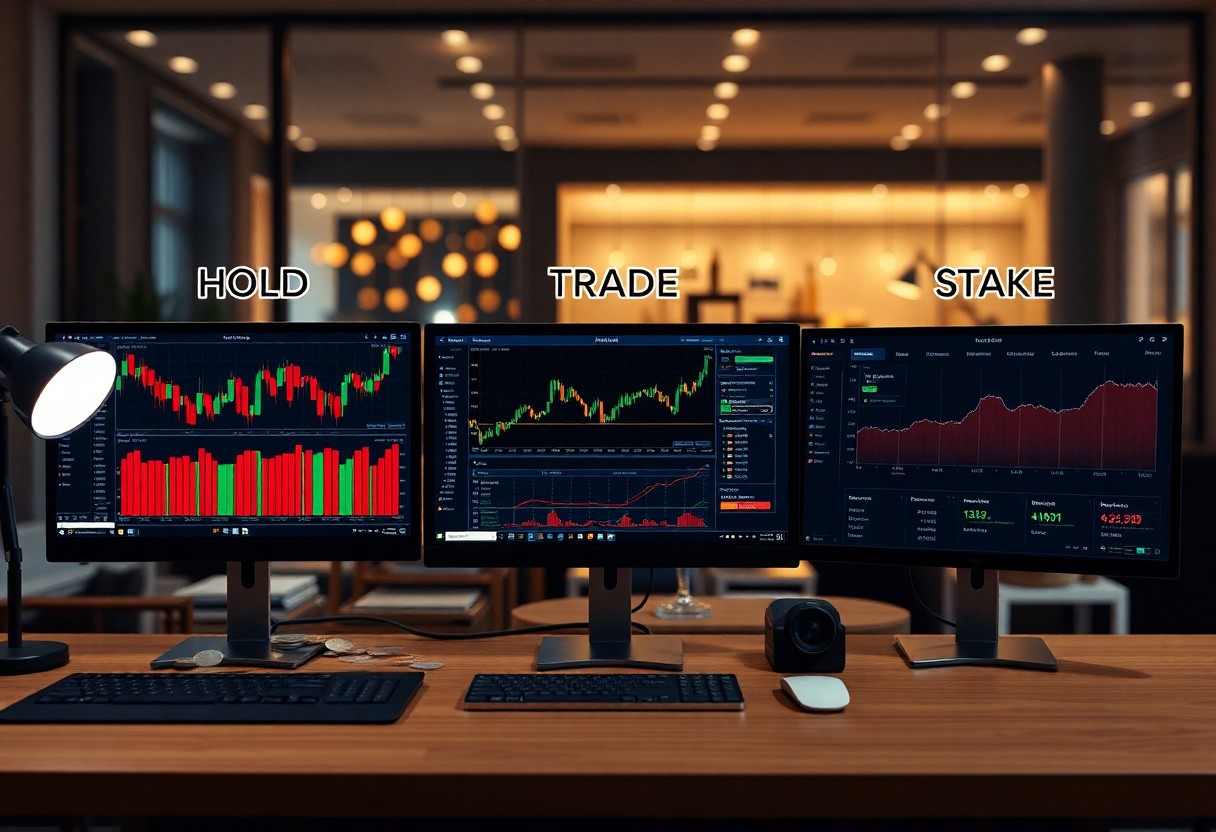
Should Beginners Hold, Trade, or Stake Their Crypto?
Most beginners face the dilemma of whether to hold, trade, or stake their cryptocurrency investments. Each option comes with its own set of risks and rewards, making it necessary for you to understand what aligns best with your financial goals and risk tolerance. Holding can provide stability, trading may offer quick gains, while staking allows you to earn passive income through your assets. Evaluating these strategies carefully can help you navigate the volatile crypto landscape wisely.
Types of Crypto Strategies
To understand the landscape of cryptocurrency investing, you should consider various strategies. Each has its own risk-reward profile:
| Holding | Buy and hold long-term. |
| Trading | Frequent buying and selling for profit. |
| Staking | Earning rewards by holding coins. |
| Dollar-Cost Averaging | Investing a fixed amount regularly. |
| Market Analysis | Use of trends and charts for decisions. |
### Holding
Strategies for holding involve purchasing cryptocurrency and retaining it for an extended period, allowing potential appreciation over time. Your goal is to benefit from long-term market trends.
### Trading
To navigate the trading landscape, you need to engage in the regular buying and selling of cryptocurrencies. This strategy aims to capitalize on short-term price movement for quick profits.
Another important aspect is understanding market trends, timing your trades, and utilizing technical analysis. Your experience and knowledge play a significant role in successful trading outcomes.
### Staking
Staking involves locking up your cryptocurrency to support network operations, earning rewards in return. This method can generate passive income while still holding your assets.
Plus, staking can enhance network security and often yields higher returns than traditional saving methods. However, be cautious, as you may face liquidity issues and potential market changes impacting your staked assets.
Tips for Beginners
One important aspect of entering the cryptocurrency space is to develop a strong foundation. Consider these tips:
- Understand basic concepts of crypto.
- Start with small amounts to minimize risk.
- Choose a secure wallet for storing assets.
- Stay informed about market trends.
Any decisions made should be based on careful consideration and personal circumstance.
Research and Understanding
Beginners need to prioritize learning about the cryptocurrency landscape. Familiarize yourself with blockchain technology, various coins, and the factors influencing market trends. Deep research can significantly impact your understanding and investment decisions, enabling you to make informed choices.
Risk Management
To succeed in crypto, it’s crucial to prioritize risk management strategies. Establish how much of your capital you’re willing to invest and set limits on potential losses. Using stop-loss orders can help protect your assets during market volatility.
Understanding risk management extends to being aware of market fluctuations that can affect your investments. You should employ diversification to minimize exposure to individual assets and set realistic goals for your crypto journey. Keep an eye on emotional factors, as impulsive decisions can lead to significant losses. Implementing a strategy that aligns with your risk tolerance ensures you stay in control of your financial future.
Step-by-Step Guide to Each Strategy
Not all strategies are created equal when it comes to managing your cryptocurrency investments. Understanding how each option works is important for success. Below is a breakdown of holding, trading, and staking, so you can choose the best path for your goals.
| Strategy | Steps |
|---|---|
| Hold | Choose a wallet, buy crypto, secure your assets. |
| Trade | Create an account on an exchange, analyze markets, execute trades. |
| Stake | Research staking options, choose a platform, lock your assets. |
How to Hold Crypto
Clearly, holding crypto requires a secure wallet for storing your digital assets. You’ll need to purchase your chosen cryptocurrency through an exchange and then transfer it to your wallet. Ensure to use strong passwords and enable two-factor authentication to enhance your security.
How to Trade Crypto
Clearly, trading crypto involves buying and selling on exchanges to profit from market fluctuations. You’ll need to study market trends, set trading strategies, and manage your portfolio actively.
To succeed in trading, you must develop a strategic approach. This includes setting clear goals, understanding risk management, and being ready to adapt to market conditions. Utilize trading tools and charts to analyze price movements, and stay updated on news that could impact the market.
How to Stake Crypto
If you’re considering staking, start by researching projects that offer staking rewards. Choose a platform that fits your needs and lock your crypto assets as guided to earn passive income.
Crypto staking allows you to earn rewards while supporting a network’s transaction validation. With this strategy, be aware of potential risks like market volatility and liquidity issues. It’s important to understand staking periods and fees involved, which could affect your returns. Make informed choices to maximize your staking benefits.
Factors to Consider
Now, when deciding whether to hold, trade, or stake your crypto, consider the following factors:
- Market Volatility
- Investment Horizon
- Risk Tolerance
- Financial Knowledge
- Tax Implications
Any decision you make should align with your personal circumstances and financial situation.
Market Conditions
Market dynamics play a significant role in your crypto strategy. Evaluating current market trends, upcoming regulations, and overall sentiment can help you determine the best course of action. Staying informed about price fluctuations and economic indicators will guide your decision-making process.
Personal Financial Goals
There’s a direct link between your financial objectives and your approach to crypto. Understand your long-term and short-term goals, as they should dictate whether to hold, trade, or stake. Ensuring that your strategy aligns with both your risk appetite and financial needs is vital.
Conditions surrounding your financial goals will dictate your crypto strategy. If your objectives involve short-term gains, trading might be suitable, while a long-term vision may warrant holding or staking. Evaluate your cash flow needs and consider both the potential risks and benefits of your chosen method. Balancing your goals with a realistic assessment of market conditions will help you navigate the crypto landscape effectively.
Pros and Cons of Each Strategy
For beginners in the crypto space, understanding the pros and cons of holding, trading, and staking is vital for making informed decisions. Each strategy has its unique benefits and challenges that can significantly impact your investment outcomes.
Pros and Cons Breakdown
| Strategy | Pros | Cons |
| Holding | Long-term gains, less stress | Market volatility, opportunity cost |
| Trading | Potential for quick profits | High risk, time-consuming |
| Staking | Passive income, network support | Locked funds, market risk |
| Holding | Less frequent buying/selling | Requires patience |
| Trading | Market insights, skill development | Emotional stress, fees |
| Staking | Compounding returns | Technical issues, platform changes |
| Holding | No need for constant monitoring | Missed trends |
| Trading | Flexibility in strategy | Requires market knowledge |
| Staking | Environmentally friendly | Limited choice of coins |
| Holding | Low transaction costs | Less engaged |
Holding: Benefits and Drawbacks
Benefits of holding include the potential for significant long-term gains while minimizing stress associated with daily market fluctuations. However, you face challenges such as market volatility and the opportunity cost of not participating in short-term trades.
Trading: Benefits and Drawbacks
For beginners, trading offers the allure of quick profits, allowing you to capitalize on short-term market movements. However, this strategy carries a higher risk due to market unpredictability, along with the demands of time and effort required for successful trading.
With trading, you must develop a keen understanding of market trends and price movements, which can lead to both lucrative rewards and potential losses. The emotional strain of constantly monitoring the market may also affect your decision-making process, making it vital to remain disciplined and informed.
Staking: Benefits and Drawbacks
Clearly, staking provides an opportunity for passive income by earning rewards for participating in blockchain networks. Nonetheless, you must be aware that your funds can be locked up for a specified duration, exposing you to market risks and potential losses.
It’s important to note that while staking can generate attractive returns, you may face technical challenges and limited options for coins, making it vital to choose platforms carefully. Additionally, your staked assets may be impacted by downtimes or changes in protocols, potentially jeopardizing your earnings.
Common Mistakes to Avoid
Many beginners fall into common pitfalls that can hinder their success in the crypto space. These mistakes often stem from a lack of experience or a misunderstanding of how the market operates. Avoiding emotional trading, neglecting security, and failing to do proper research are key areas where beginners frequently go wrong.
Emotional Trading
To navigate the unpredictable crypto market, you must resist the urge to make impulsive decisions driven by fear or greed. Emotional trading can lead to poor choices and significant losses. Establish a clear strategy and stick to it, regardless of market fluctuations.
Neglecting Security
Neglecting security can expose you to unnecessary risks, such as theft and fraud. Use strong, unique passwords and enable two-factor authentication on your accounts. Always be cautious when sharing your information, especially on social media or forums.
Plus, by implementing proper security measures, you protect your investments from potential cyber threats. Keeping your cryptocurrencies in a hardware wallet rather than on exchanges offers enhanced safety. Regularly updating your security protocols, such as software updates, strengthens your defenses. Always remain vigilant against phishing schemes that can compromise your accounts.
Summing up
The decision to hold, trade, or stake your crypto depends on your financial goals and risk tolerance. If you seek stability and long-term growth, holding may be your best option. For those interested in actively managing their investments, trading could offer short-term gains, albeit with higher risks. Staking can be a great way to earn passive income while supporting the network. Evaluate your strategy carefully to align it with your investment objectives and market understanding to make informed choices.