Site Yield Analysis Explained: Units, Density, and Constraints
Ever wonder how a seemingly empty plot of land transforms into a bustling neighborhood or a vibrant commercial hub? It’s not magic; it’s the result of meticulous planning and a crucial process called Site Yield Analysis. If you’re involved in real estate, development, or even just curious about how cities grow, understanding this concept is incredibly valuable.
At its heart, site yield analysis is about figuring out the maximum developable area or number of units a piece of land can support, while still playing by all the rules and making good business sense. It’s like a puzzle where you’re trying to fit as much as possible onto a board, but you’ve got specific shapes, sizes, and boundary lines you can’t cross.
What is a site yield analysis?
A site yield analysis is essentially a detailed study that determines the realistic development potential of a specific parcel of land. Think of it as painting a picture of what could be built, rather than just what is there. This isn’t just about raw acreage; it dives deep into a multitude of factors, from zoning regulations and topographical features to environmental considerations and market demand. The goal is to maximize the return on investment for developers while creating a feasible and desirable project.
This analysis is often one of the very first steps in any development project, long before an architect even draws a single line. It provides crucial data that informs land acquisition decisions, financial projections, and ultimately, the overall viability of a project. Without a solid site yield analysis, developers might overpay for land, design a project that can’t be built, or simply miss out on opportunities to optimize their investment.
Imagine a developer eyeing a large tract of undeveloped land. They can’t just assume they can build a hundred homes on it. They need to understand the local zoning, how much of the land is usable (what about floodplains or steep slopes?), and what kind of infrastructure is already in place or would need to be added. A thorough site yield analysis brings all these pieces together.
The Foundation: Understanding Units and Density
When we talk about site yield, we often talk in terms of “units” and “density.” These are fundamental concepts that directly impact the analysis.
Units can refer to different things depending on the type of development:
-
Residential: This most commonly means dwelling units – individual homes, apartments, condos, or townhouses.
-
Commercial: Units might be measured in square footage of retail space, office space, or industrial space.
-
Mixed-Use: A combination of the above, perhaps a certain number of residential units alongside a specific amount of commercial square footage.
The choice of unit directly influences how the yield is calculated and what constraints apply. For instance, a residential project will have different density requirements than a commercial one.
Density is where things get really interesting. It’s the measure of how many units (or how much square footage) can be placed on a given area of land. It’s usually expressed in terms of units per acre (UPA) for residential projects, or floor area ratio (FAR) for commercial and mixed-use projects.
-
Units Per Acre (UPA): If a zoning ordinance allows for 10 units per acre, and you have a 5-acre parcel, theoretically you could build 50 units. However, as we’ll see, it’s rarely that simple.
-
Floor Area Ratio (FAR): This is the ratio of a building’s total floor area to the size of the land it’s built on. If you have a 1-acre lot (43,560 sq ft) and an FAR of 1.0, you could build a building with a total floor area of 43,560 sq ft. This could be a single-story building covering the whole lot, or a multi-story building covering a smaller footprint.
Understanding these concepts is paramount because local zoning ordinances almost always have strict regulations regarding density. These regulations are in place to manage traffic, preserve open space, ensure adequate infrastructure, and maintain the character of a neighborhood. A developer might want to build 20 units per acre, but if the zoning only allows 8, then that becomes a hard limit.
Unpacking the Constraints: What Limits Development?
This is where site yield analysis truly earns its keep. A raw land area rarely translates directly into developable area. Numerous constraints, both regulatory and physical, chip away at the total potential. Ignoring these can lead to costly mistakes and stalled projects.
1. Zoning and Regulatory Constraints
These are often the most significant hurdles. Every parcel of land falls under a specific zoning designation (e.g., R-1 for single-family residential, C-2 for general commercial). Each zone comes with a rulebook governing:
-
Allowed Uses: Can you build homes, shops, or both?
-
Setbacks: How far must buildings be from property lines, streets, or other structures? These create mandatory open spaces.
-
Height Restrictions: How tall can buildings be?
-
Lot Coverage: What percentage of the lot can be covered by buildings?
-
Open Space Requirements: How much of the site must remain undeveloped, often for parks, recreation, or landscaping?
-
Parking Requirements: How many parking spaces are required per unit or per square foot of commercial space? This can eat up a substantial portion of the site.
-
Stormwater Management: Regulations dictate how rainwater runoff must be managed on-site, often requiring detention or retention ponds.
These regulations are non-negotiable and form the bedrock of any site yield calculation. A skilled civil engineering company in Dallas, for example, would be adept at navigating these complex local ordinances to maximize a site’s potential within legal boundaries.
2. Environmental and Physical Constraints
Nature and existing conditions also play a huge role:
-
Topography: Steep slopes might be undevelopable or require expensive grading. Flat land is generally easier and cheaper to build on.
-
Floodplains and Wetlands: These areas are often protected and severely restrict or prohibit development to prevent environmental damage and protect future residents from hazards.
-
Critical Habitat Areas: Presence of endangered species or sensitive ecosystems can trigger strict regulations.
-
Soil Conditions: Poor soil can necessitate expensive foundation work or soil remediation.
-
Existing Easements: Utilities (water, sewer, power lines) often have easements across private property, meaning those areas cannot be built upon.
-
Hazardous Materials: Contaminated land requires costly cleanup before development can proceed.
-
Historic Preservation: If a site contains historic structures or artifacts, development may be limited or require specific preservation efforts.
3. Infrastructure and Utility Constraints
Even if a site could technically support a certain number of units, the existing infrastructure might not be able to handle it.
-
Road Access: Is there adequate road access to serve the projected traffic? Will new roads or road improvements be required?
-
Water and Sewer: Is there sufficient capacity in the municipal water and sewer lines to serve the development? Upgrading these can be incredibly expensive.
-
Stormwater Systems: Can the existing stormwater infrastructure handle the increased runoff from impervious surfaces?
-
Power and Communications: Is there sufficient electrical grid capacity, and access to telecommunications?
These infrastructure considerations are often overlooked by less experienced developers but are critical to a project’s feasibility and cost.
4. Market Demand and Financial Constraints
While not physical or regulatory, market demand significantly influences the realistic yield. There’s no point in designing for 200 units if the local market can only absorb 100 within a reasonable timeframe at a profitable price point.
-
Absorption Rate: How quickly can the market sell or lease the proposed units?
-
Pricing: Can the units be sold or rented at a price that justifies the development costs?
-
Construction Costs: These fluctuate and directly impact profitability.
-
Financing: Lenders will scrutinize the site yield analysis as part of their due diligence.
The Process: How a Site Yield Analysis is Conducted
A comprehensive site yield analysis typically involves several key steps:
-
Data Collection: This is the information-gathering phase. It includes obtaining surveys, topographical maps, aerial imagery, zoning maps, utility maps, environmental reports, and any relevant master plans for the area.
-
Site Reconnaissance: boots on the ground! Visiting the site provides invaluable insights that maps alone cannot offer, such as existing vegetation, neighboring properties, and access points.
-
Regulatory Review: A deep dive into the local zoning ordinance, subdivision regulations, and any other applicable codes to identify all the constraints.
-
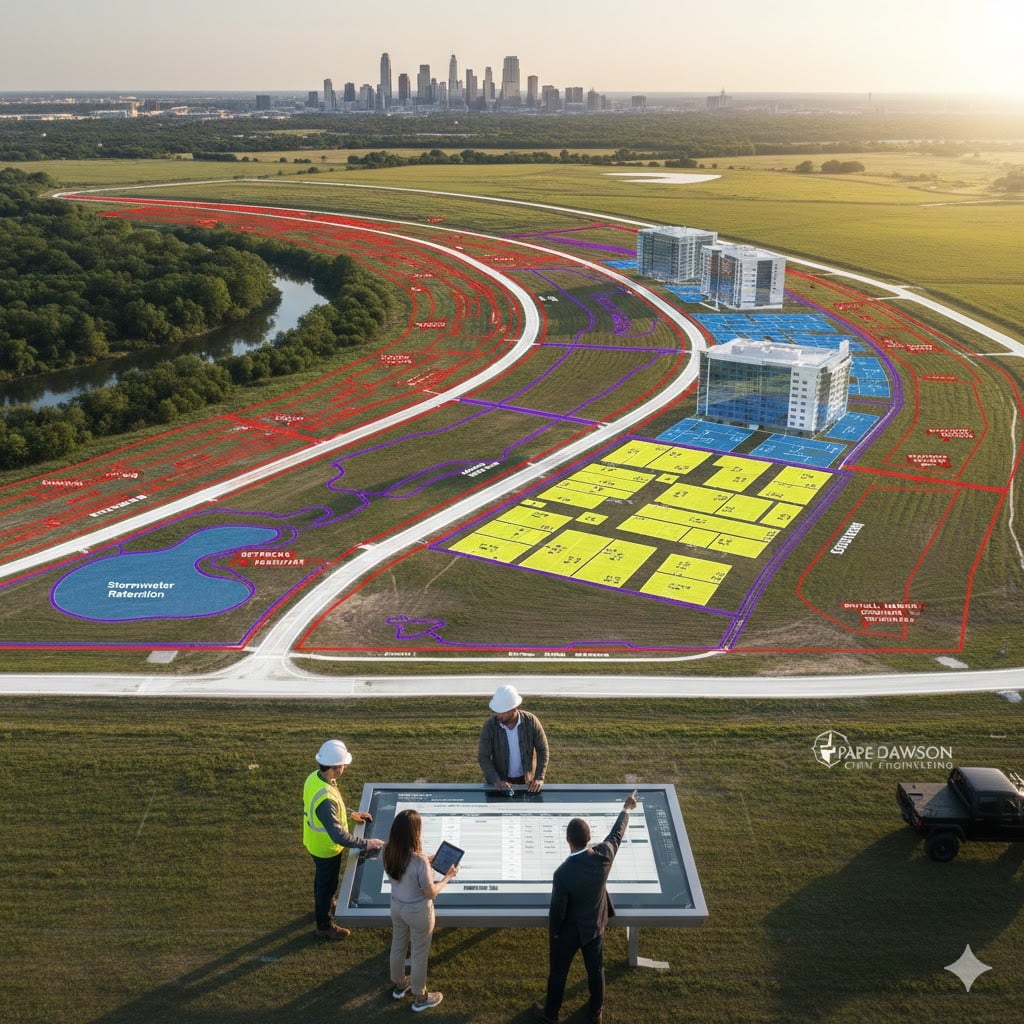
Constraint Mapping: Overlaying all identified constraints onto the site plan. This visually highlights undevelopable areas, setbacks, easements, and areas with specific limitations.
-
Developable Area Calculation: Subtracting all constrained areas from the gross site area to arrive at the net developable area.
-
Yield Calculation: Applying the allowable densities (UPA or FAR) to the net developable area, while also factoring in parking requirements, open space, and other site amenities. This step often involves iterative adjustments to optimize the layout.
-
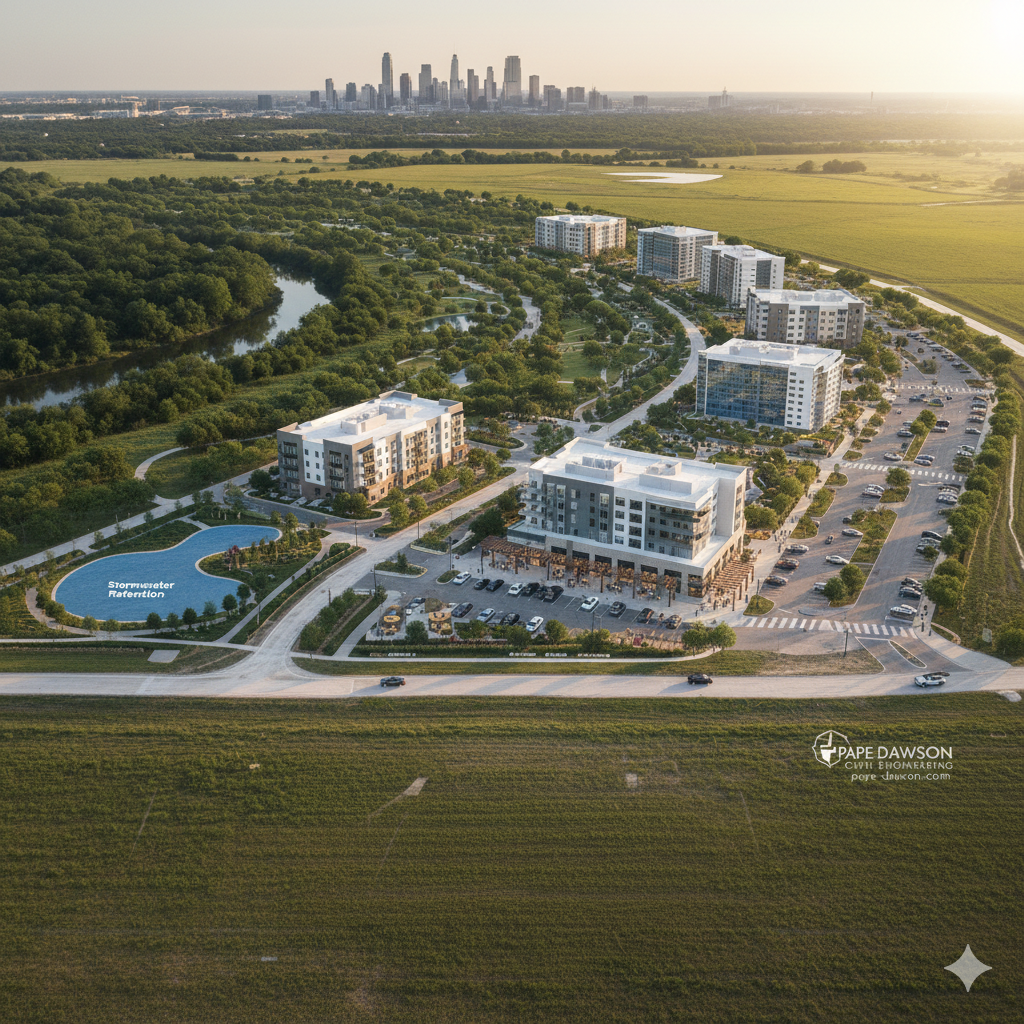
Conceptual Site Plan Development: Creating a preliminary layout showing how buildings, parking, open space, and infrastructure might be arranged. This isn’t a final design, but rather a schematic to test the yield assumptions.
-
Financial Feasibility Review: Collaborating with financial experts to assess if the projected yield can generate a profitable return given market conditions and development costs.