Copper Price Risk: Smarter Selling Strategies for Small Businesses
Copper is one of the most commercially important non-ferrous metals, but selling it profitably is not always straightforward. Prices can move quickly in response to global demand, energy costs, currency fluctuations, inventory levels, and geopolitical events. For small businesses, those movements can turn stored copper from a valuable asset into an unpredictable line item.
Electrical contractors, demolition firms, repair workshops, manufacturers, recyclers, and property maintenance companies regularly accumulate copper scrap. Yet many sell it without a defined process. They wait until storage is full, accept the first offer, or focus on the market headline while overlooking material quality and transaction costs. A smarter strategy treats recyclable copper as managed inventory rather than incidental waste.
Why Copper Prices Can Change So Quickly
Copper demand is closely connected to construction, manufacturing, transport, power infrastructure, and renewable energy. Because these sectors respond to economic conditions, the market can rise or fall before changes become visible in a small company’s order book.
Supply creates another layer of uncertainty. Mine disruptions, refinery maintenance, transportation problems, energy shortages, and changes in international trade can affect availability. In Finland and elsewhere in the euro area, exchange rates may also influence local purchasing prices because global metals are commonly referenced in US dollars.
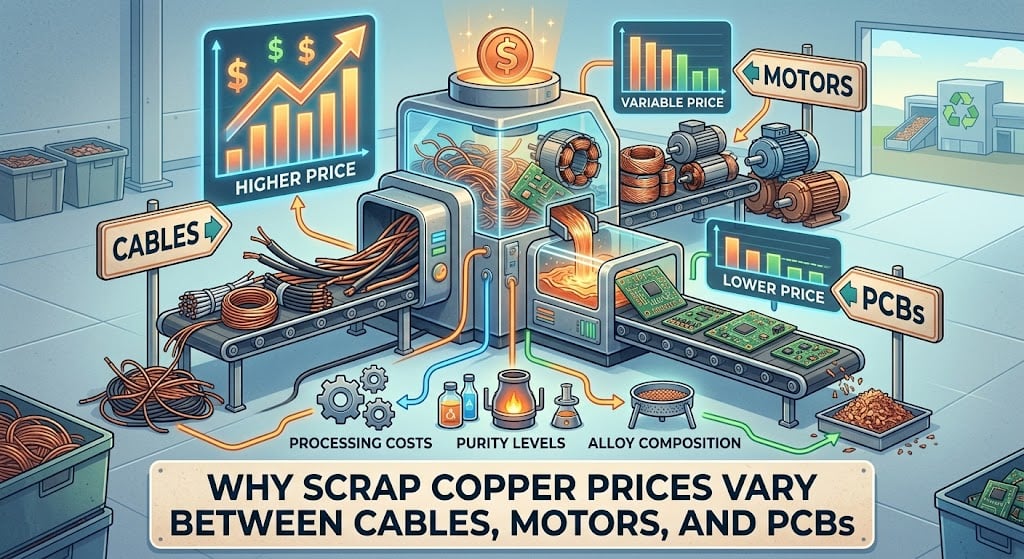
However, the widely reported commodity quotation is not the same as the amount a business receives for scrap. A recycler must consider grade, purity, contamination, processing requirements, logistics, and refinery terms. Businesses should therefore monitor both the international market and the actual copper price available for their material (kuparin hinta).
Start by Knowing What You Actually Have
One of the most common selling mistakes is combining high-value material with lower-grade scrap. Clean copper wire, tubing, busbars, mixed cables, coated components, and copper-bearing assemblies do not necessarily receive the same valuation. Paint, insulation, solder, oil, steel attachments, and other contaminants can reduce recoverable value or increase processing costs.
Simple sorting procedures can significantly improve consistency. Create clearly labeled containers for common grades, train employees to avoid cross-contamination, and keep copper separate from brass, aluminium, stainless steel, and ferrous material. Do not strip or process components automatically: the labor and equipment costs may exceed the additional return, and unsafe handling can introduce compliance risks.
Photographs and basic records are also useful. Note the material source, estimated weight, condition, and date collected. When requesting a quote, accurate information allows the buyer to evaluate the lot more efficiently and reduces the chance of an unpleasant adjustment after delivery.
Use a Selling Policy Instead of Trying to Predict the Peak
No business can reliably identify the highest market price in advance. Waiting indefinitely for a perfect selling day can create storage costs, theft exposure, working-capital pressure, and safety problems. The better objective is not to beat the market every time; it is to build a repeatable process that protects margins.
Consider adopting one of these practical approaches:
- Scheduled selling: Sell monthly or quarterly to reduce the effect of short-term market timing.
- Volume thresholds: Request collection or delivery when a defined weight is reached.
- Staggered sales: Divide a large holding into several lots instead of selling everything on one day.
- Target-price rules: Sell a portion when the offered price reaches a level that supports your required margin.
- Cash-flow triggers: Convert stored metal into cash when the funds can be used more productively elsewhere.
For example, an electrical contractor accumulating material throughout a six-month project could sell one-third at regular intervals. If prices fall, the company avoids exposing the entire stock to the decline. If prices rise, some inventory remains available to benefit. This is a basic form of risk averaging that requires no complex financial instruments.
Compare Net Returns, Not Just Headline Rates
The highest advertised rate does not always produce the best result. A quote may depend on minimum volume, a specific grade, delivery to a distant facility, or deductions discovered during inspection. To compare buyers fairly, calculate the net return after transportation, employee time, container rental, processing, weighing differences, and possible quality deductions.
Ask prospective buyers several direct questions:
- How is each copper grade identified and priced?
- Is the offer fixed at booking, delivery, or final inspection?
- Which impurities or attachments lead to deductions?
- How are scales verified, and can weight documentation be provided?
- Are collection, containers, or transport charged separately?
- When and how will payment be completed?
Transparent answers matter, particularly for small firms that cannot absorb delayed payments or unexplained deductions. A reliable partner should make the valuation process understandable rather than relying on technical language to obscure it.
Improve Value Before the Material Leaves Your Site
Good housekeeping supports both revenue and workplace safety. Store copper in a dry, controlled area, use containers that prevent mixing, and restrict access to reduce theft. Weigh lots when practical and reconcile outgoing quantities with receipts. These controls are especially valuable when scrap is generated by multiple teams or at several job sites.
Businesses should also make recycling responsibilities explicit. Assign one person to oversee sorting, quote requests, sales records, and buyer communication. Even a simple spreadsheet can track weight, grade, offered rate, transport expense, payment date, and net proceeds. Over time, this information reveals which projects generate the most recoverable copper and whether operational changes are improving returns.
Metalaxis offers purchasing and recycling services for non-ferrous metals across Finland, serving both companies and individuals. Its focus on competitive pricing, efficient transactions, and responsible recycling can help smaller operators turn accumulated copper into traceable revenue. Businesses looking for a clearer route to recycle and sell copper (kupari) can review the accepted-material information and request terms suited to their volume and logistics.
Make Sustainability Part of the Commercial Decision
Responsible recycling is not only an environmental statement. Recovering copper reduces the need for primary extraction and keeps useful material in circulation. It can also support customer reporting, procurement requirements, and sustainability goals. For contractors and suppliers bidding on environmentally conscious projects, documented recycling practices may strengthen credibility.
Keep transaction records, weight tickets, and material descriptions where available. These documents help demonstrate that metal has entered a legitimate recycling channel. They also support internal accounting and make it easier to evaluate the financial contribution of scrap recovery.
A Better Process Reduces Price Risk
Copper market volatility cannot be eliminated, but its effect can be managed. Sort material carefully, establish selling triggers, stagger larger volumes, compare net proceeds, and work with a buyer that communicates clearly. These habits transform a reactive disposal task into a controlled business process.
The next practical step is to audit the copper currently stored at your premises. Identify its grades, estimate the quantities, calculate storage and transport costs, and request a transparent evaluation. With a consistent policy and a dependable recycling partner such as Metalaxis, small businesses can reduce uncertainty, release working capital sooner, and recover more value from material they already generate.